
Does your dog struggle to calm down when guests come over, get overly excited in new environments, or seem to have endless energy? While some dogs naturally have an easier time relaxing than others, learning to settle is a skill that can be taught with patience, consistency, and the right dog training approach.
Teaching your dog to settle can make everyday situations easier for both of you! Let’s take a closer look at why calm behavior matters and how you can help your dog develop this important skill.
What Does It Mean for a Dog to “Settle”?
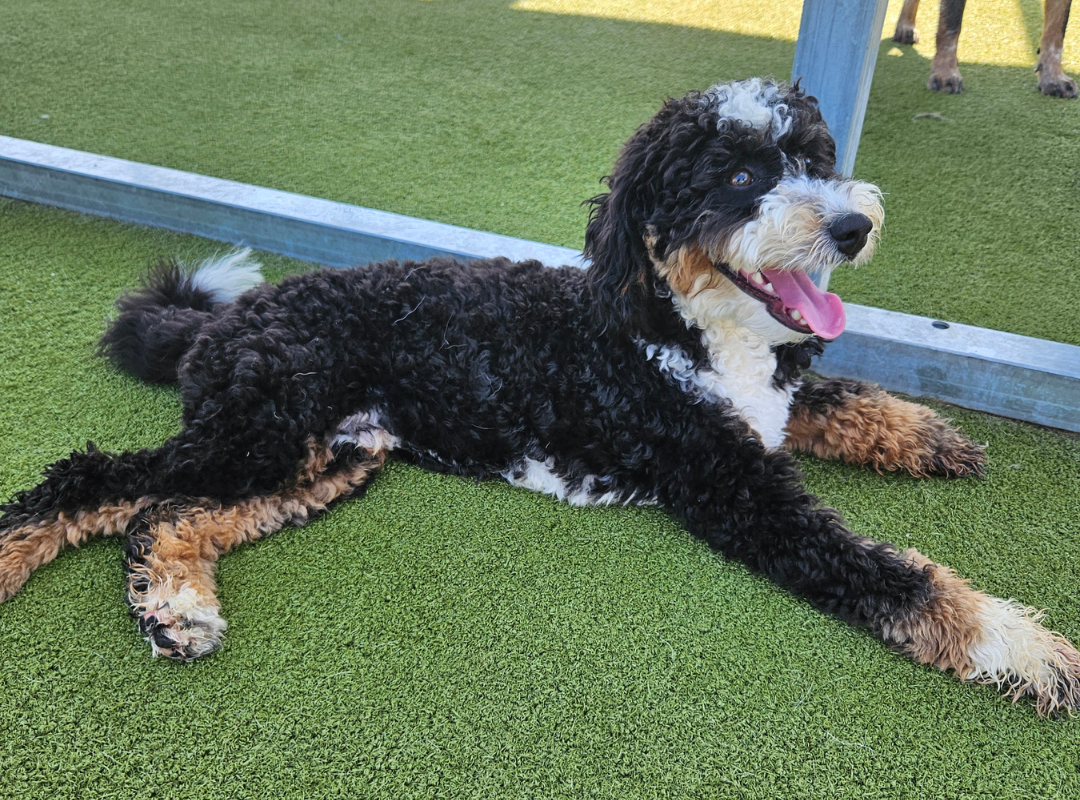
For most owners, “settle” simply means to calm down, but that word on its own means absolutely nothing to a dog. In order to be able to teach a dog this new command, we first have to think about the action. What do we actually want our dog to do when we ask them to settle?
Generally, this means assuming a calm, relaxed position, like lying down comfortably.
It may sound simple, but learning when and how to relax is an important part of helping your dog understand what’s expected of them.
Why Teaching Calm Is an Important Part of Dog Training
Dogs are instinct-driven animals. When given the opportunity, they will likely do whatever they “feel” is best. Without proper training and guidance, this can mean chewing on furniture, jumping on guests, or barking at other dogs.
If raised in a wild pack, older and wiser dogs would help teach appropriate behavior through gentle, guiding corrections and by modeling good behavior. In our homes, however, where puppies aren’t surrounded by a pack of dogs 24/7, we have to take on the role of the teacher and show them how to behave in a household.
Teaching calm is an important part of dog training. Helping your dog learn how to settle and relax can contribute to their happiness and well-being as they grow older.
Of course, some dogs pick up this skill more easily than others, and understanding what influences their behavior can help you approach training with realistic expectations.
Why Do Some Dogs Have a Harder Time Settling?
There are many factors that influence a dog’s ability to truly settle and relax. Age, temperament, and daily routines can all play a role
Age
Puppies want to play, and young dogs really want to move. Just like young children, encouraging them to be still and relax takes a lot of time and patience.
Think about how difficult it can be to get a toddler to sit still for a photo. Now, imagine asking the same toddler to stay still for several minutes at a time.
Yeah, teaching a puppy to settle can be a lot like that!
Temperament
Age isn’t the only factor to consider. Your dog’s natural temperament can also influence how easily they relax.
A Belgian Malinois, for example, is going to have a much more energetic personality than a Basset Hound. Asking that Malinois to settle and relax will probably be more challenging than asking the Hound to do the same thing.
Understanding your dog’s natural temperament can help you set realistic expectations as you work on teaching calm behavior.
Structure and Exercise
While age and temperament influence your dog’s energy levels, their daily routine is another important piece of the puzzle.
Providing appropriate structure and exercise for your dog is one of the best ways to help them learn to settle.
Regardless of age or natural disposition, making sure your dog understands the rules and expectations while also receiving adequate mental and physical stimulation can make a significant difference in their ability to relax.
With those needs being met, you can begin working on the settle command itself.
How to Teach Your Dog to Settle
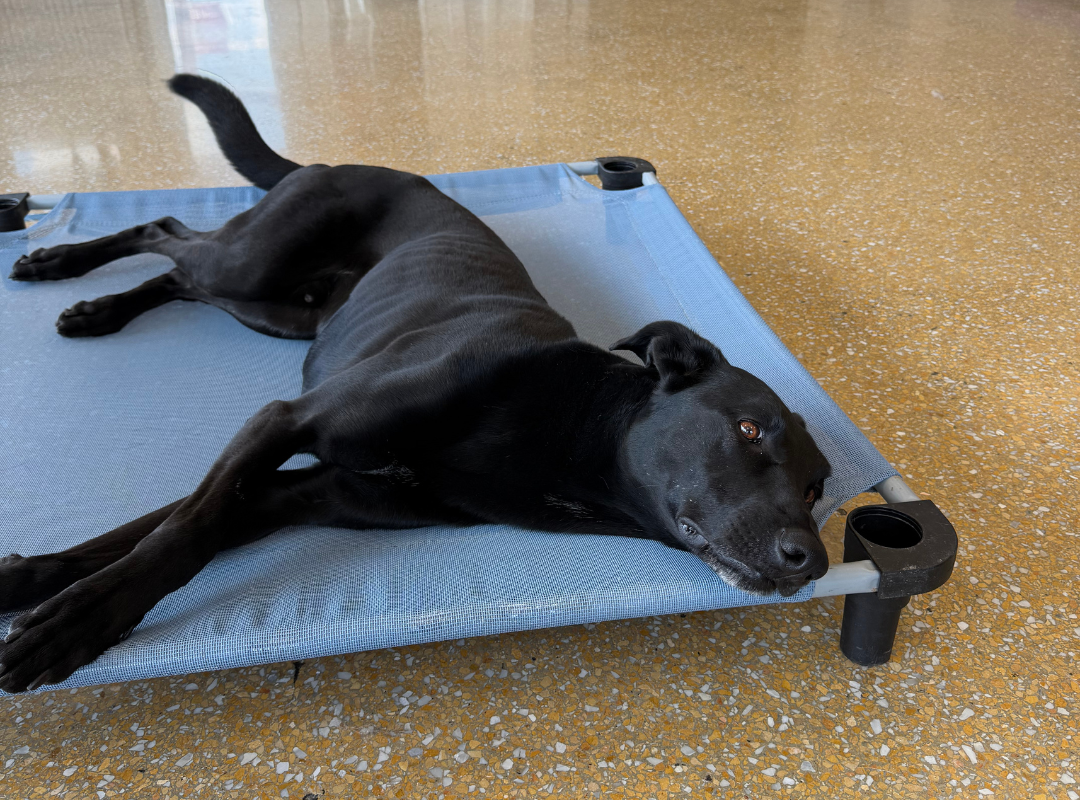
There is more than one way to teach a dog to settle, so it’s important to find a method that works best for you and your dog.
The following dog relaxation training method works well for a variety of dogs, as long as you stay consistent and follow through.
Step 1: Set a Boundary
Create a designated place that looks and feels different from the area around your dog.
This isn’t simply a corner of a room. Instead, use a towel, blanket, yoga mat, or dog bed that your dog can actively walk onto.
Spend some time guiding your dog onto this spot and rewarding them with treats each time they step onto it. As they walk onto their mat, say the command you want to use for “settle.”
Step 2: Build the Time
Once your dog has learned that walking onto their designated spot is a good thing, begin lengthening the time between rewards.
Your dog should remain on their mat, but you might step a little farther away or have them wait a moment before receiving their reward.
The goal is to gradually build their ability to stay in place.
Step 3: Continue Building Time and Reward Relaxed Behavior
Now that your pup knows the basics, we can start increasing our expectations.
Begin practicing longer periods on the mat. At this stage, we’re no longer rewarding your dog simply for remaining within that boundary. We’re looking for signs of genuine relaxation.
Do they lie down with their hips shifted to the side? Reward!
Do they flop over and fully relax? Reward!
We’ll ignore unwanted behaviors like whining or jumping and quietly return the dog to their mat if they step off. But we definitely want to let them know when they’ve done the right thing. A simple “Yes” followed by a treat can help reinforce the behavior and strengthen their understanding of the settle command.
Practicing Calm in Everyday Situations
The best part about teaching your dog to settle is that you can use this skill almost anywhere.
Does your dog jump on guests as they come through the door? Set down their mat and ask them to settle before you even open the door.
Does your dog get overly excited in public places? Bring a blanket and practice settling wherever you are.
And if you accidentally forget that blanket? A sweatshirt, jacket, or old T-shirt can work in a pinch!
As your dog becomes more comfortable with the command, practicing in different environments can help them learn to settle in everyday situations. Just remember that success in one environment doesn’t necessarily mean your dog is ready for every situation.
Common Mistakes That Can Make Settling More Difficult
There are two big mistakes people make when teaching their dogs to settle.
Expecting Too Much Too Soon
The settle command can be a wonderful tool in many situations when your dog is ready for it. Rushing the process and expecting your dog to settle in highly distracting environments before they fully understand what’s expected can create more stress and anxiety for both you and your dog.
Go slow. Start practicing in environments with little to no distractions, then gradually work your way up as your dog becomes more confident with the command.
Rewarding the Wrong Behavior
Another common mistake is unintentionally rewarding the very behaviors you’re trying to discourage.
It’s not unusual for a dog, especially a young dog, to become frustrated at some point and begin whining, crying, or barking. Too often, owners try to comfort or quiet their dogs by talking to them or, worse, giving them treats. Unfortunately, this can teach the dog that whining and barking get them exactly what they want: food and attention.
This is where it’s particularly important to avoid rewarding unwanted behavior and instead focus on reinforcing the calm, relaxed behaviors you want to see.
Learning to recognize these moments and respond consistently takes practice, and having professional guidance can make the process easier.
When to Get Help From a Dog Training Professional
Is it possible to train your dog without help? Of course!
Just like it’s possible to build a house without a construction crew. But why would you want to?
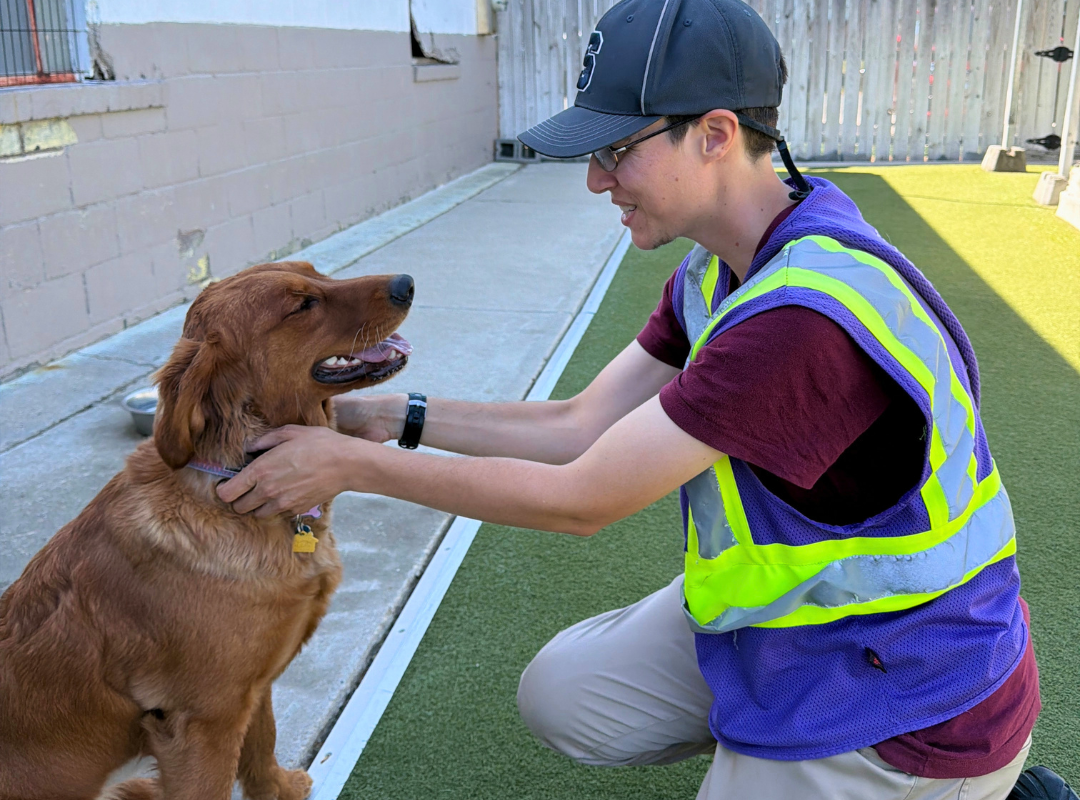
A professional dog trainer shouldn’t be your last resort when you’re feeling frustrated. Instead, your trainer should be part of your team from the beginning. At Impawsible Pups, we want to help build your dog’s skills from the ground up and be a resource for you and your whole family.
If you’re looking for guidance with teaching calm behavior or building better habits at home, our team is here to help. Visit our website to learn more about our training programs and book your free consultation call.