
Becoming a first-time dog owner is exciting, rewarding, and definitely an adjustment.
One day, you’re bringing home your new best friend. Next, you’re chasing them around the house because they somehow got a hold of a sock, a remote control, and half a paper towel roll.
Bringing home a puppy or rescue dog can come with a lot of questions, and it’s common to wonder if you’re on the right track. At Impawsible Pups, we work with first-time dog owners every day, and one thing we can tell you is that almost everyone feels a little overwhelmed in the beginning.
The good news is that most of the challenges you’re facing are completely normal. While many people think dog training is all about teaching commands like sit, stay, and come, the reality is that training is just as much about teaching owners as it is about teaching dogs. Understanding how your dog learns, communicates, and experiences the world can make life easier for both of you.
Common Challenges Dog Owners Face
Most new dog owners discover pretty quickly that owning a dog is a lot more work than they expected. It’s a little like having a toddler who can run faster than you and occasionally makes questionable choices.
Some of the most common things we hear from new dog owners include:
- “Why won’t my dog stop chewing everything?”
- “How do I get them to stop pulling me down the street on walks?”
- “Why are they having accidents in the house?”
- “How do I stop them from jumping on every person they meet?”
- “Is it normal for them to have this much energy?”
Dogs are naturally curious. They explore the world with their noses, test boundaries, and sometimes seem determined to make every choice except the one you’d prefer.
That’s where training comes in!
Why Effective Dog Training Starts with Educating Owners
One of the biggest misconceptions about professional dog trainers is that they only train the dog. In reality, a huge part of our job is helping owners understand what their dog is trying to tell them.
Dogs are constantly communicating. The problem is that they don’t speak English. Instead, they communicate through body language, movement, and behavior. Sometimes what looks like stubbornness is actually confusion. What looks like bad behavior may be excitement, anxiety, frustration, or simply a dog that hasn’t learned what you want them to do instead.
At Impawsible Pups, one of our goals is to help bridge that gap between dogs and people. Once owners start understanding why their dog is behaving a certain way, training becomes much less frustrating and a lot more effective.
How Training Helps Owners Better Understand Their Dog’s Behavior
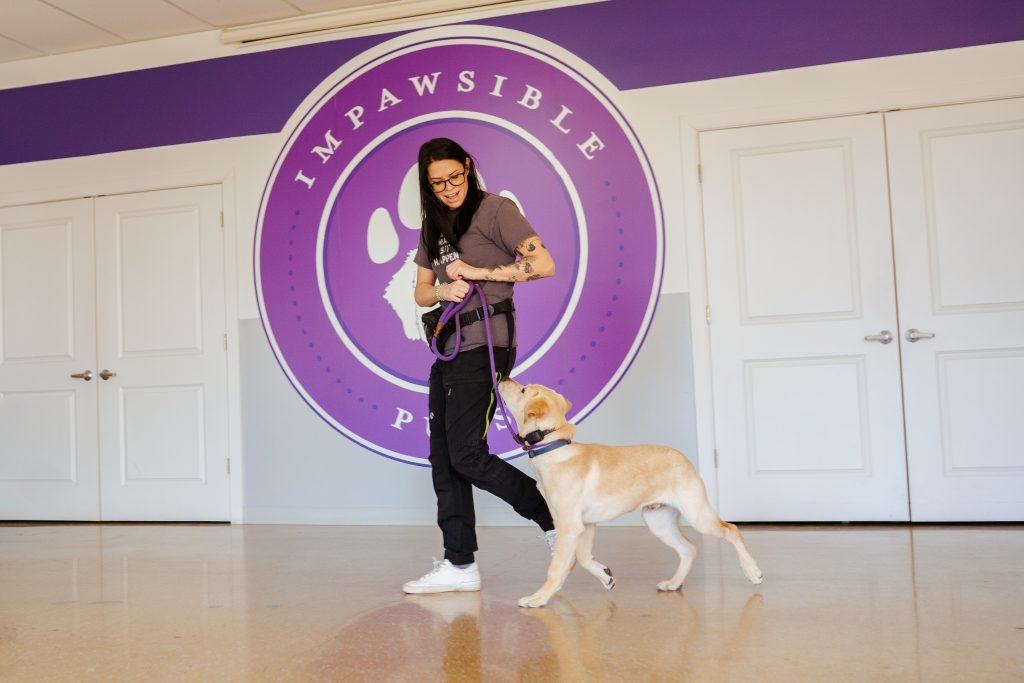
Dogs are far smarter than many people realize.
They’re constantly watching us. They notice our body language, our routines, our energy levels, and even subtle changes in our behavior. In many cases, they’re paying more attention to us than we’re paying to them.
The challenge is that dogs have different priorities than humans. Your goal may be a calm walk around the neighborhood. Your dog’s goal may be to investigate every squirrel, rabbit, leaf, and mysterious smell they encounter along the way.
Training helps owners understand what motivates their dog while also teaching dogs how to successfully navigate the human world.
We often tell clients that training isn’t about controlling your dog. It’s about creating clear communication. When dogs understand what’s expected of them, they tend to feel more confident. When owners understand what their dog needs, life becomes a lot less stressful for everyone involved.
The Role Consistency Plays in Raising a Well-Behaved Dog
If there’s one thing we wish every dog owner understood, it’s the importance of consistency. As much as we love them, dogs can be a little opportunistic. If something works once, they’re probably going to try it again. Every time a dog gets rewarded for a behavior, whether that’s attention, food, play, or affection, they’re learning.
One of the most common examples we see involves jumping.
Many owners tell us they don’t want their dog jumping on guests when they come through the front door. Then, without realizing it, they’re encouraging the dog to jump up so they can give them hugs and kisses when they get home from work.
From the dog’s perspective, this is pretty confusing. The dog isn’t thinking, “I should only jump on Mom when she gets home, but not on Grandma, the Amazon driver, or every visitor who walks through the door.”
They’re simply learning that jumping sometimes gets rewarded. Being consistent with expectations helps eliminate confusion and makes training much easier for everyone.
What Dog Owners Should Look for in a Training Program
There are plenty of training options available today, and finding the right fit can feel overwhelming. Of course, you’ll want to consider things like cost, training methods, what’s included in the program, and whether support is available after training is complete.
But one of the biggest factors is something much simpler: Do you actually like your trainer?
You’re going to be spending time with this person, asking questions, learning new skills, and trusting them to help guide you through challenges. If you don’t feel comfortable with them, the experience won’t be nearly as valuable.
At Impawsible Pups, we offer free consultations because we want prospective clients to feel confident that we’re the right fit. Our goal isn’t to work with you for a few weeks and disappear. We want to be a resource throughout your dog’s life!
How Group Training Classes Benefit Dogs and Their Owners
Group training classes can be incredibly valuable, especially for first-time dog owners. One of the biggest benefits is socialization.
Dogs learn how to focus around distractions, work near other dogs, and build confidence in new environments. Owners also get the opportunity to connect with people who are dealing with many of the same challenges.
There’s something reassuring about realizing you’re not the only person whose puppy thinks socks are a food group.
Group classes also move at a slower pace than many private training programs. While that means progress may take a little longer, it also gives owners time to learn alongside their dogs and build skills they can continue using for years.
The Long-Term Benefits of Training for Dogs and Their Owners
There’s a saying in the dog world that “a trained dog is a happy dog.”
While that’s true, it’s not really about obedience. Training creates freedom.
A dog with good manners is more likely to be included in family outings, vacations, brewery visits, neighborhood walks, and everyday adventures. A trained dog is often easier to live with, which means less stress and more quality time together.
We see it all the time. Families who once dreaded walks start enjoying them. Owners who felt frustrated start feeling confident. Dogs who struggled with boundaries begin to understand what’s expected of them.
Training doesn’t just change behavior. It often changes the entire relationship between a dog and their owner.
How Training with Impawsible Pups Builds Confidence in Dogs and Owners
There is no shortage of dog advice online. Unfortunately, a lot of it contradicts itself.
One person tells you to do one thing. Another person says that’s completely wrong. Before long, you’re wondering if you’re confusing your dog because you gave them a treat at the wrong time.
Working with a trainer gives you something the internet can’t: a real relationship with someone who knows you and your dog.
At Impawsible Pups, we’re here to answer questions, provide guidance, and help you navigate every stage of dog ownership. Whether you’re working through house training, leash manners, nutrition questions, or changes that come with aging, you don’t have to figure it all out alone. We want our clients to feel supported long after training ends.
Reach out to Impawsible Pups today to learn more about our dog training programs in Richmond, Virginia. We look forward to meeting you and your pup!