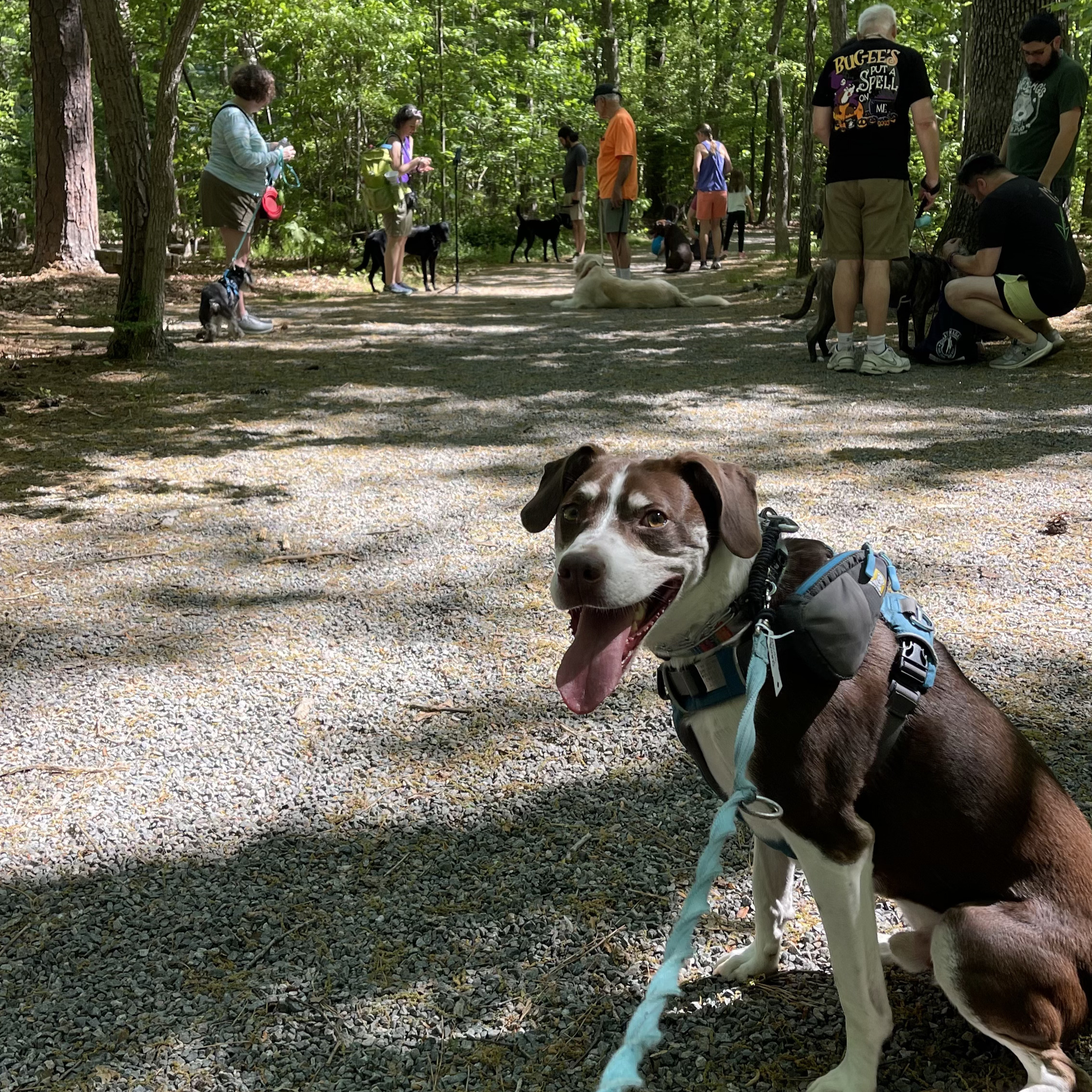
Hiking with dogs is one of the best ways to explore the outdoors, get exercise, and spend quality time together. Whether you’re heading out for a short nature walk near Richmond, Virginia, or planning a full-day adventure in the mountains, a little preparation can go a long way toward keeping both you and your pup safe.
Before you hit the trail, it’s important to understand your dog’s abilities, brush up on a few key training skills, and make sure you have the right gear. Here are a few important dog hiking safety tips from the team at Impawsible Pups that will help you feel confident and prepared for your next outdoor adventure!
Is Your Dog Ready for the Trail?
The best part about hiking is that almost any dog, and any person, can do it. Hiking doesn’t necessarily mean scaling mountains, although it certainly can!. It simply means stepping off paved paths and into nature. You don’t have to go fast, go far, or climb to a higher elevation. Most dogs, even those who use mobility aids, are ready and eager to hit the trail.
The Training Skills Every Hiking Dog Should Know
Hiking comes with a lot of distractions. There are new smells, unfamiliar animals, and often other people and dogs. At the very least, a hike is much more enjoyable if your dog has basic leash-walking skills. While a perfect heel isn’t required, you probably don’t want to be dragged for the entirety of the hike.
In addition, a reliable leave-it or ignore command can be helpful when passing major distractions, such as other dogs. If you plan to allow your dog off-leash after checking local regulations, a solid recall is an absolute must.
Dogs will encounter far more distractions on the trail than they would on a typical neighborhood walk, so make sure your dog will return to you when called.
Planning Ahead for a Successful Hike
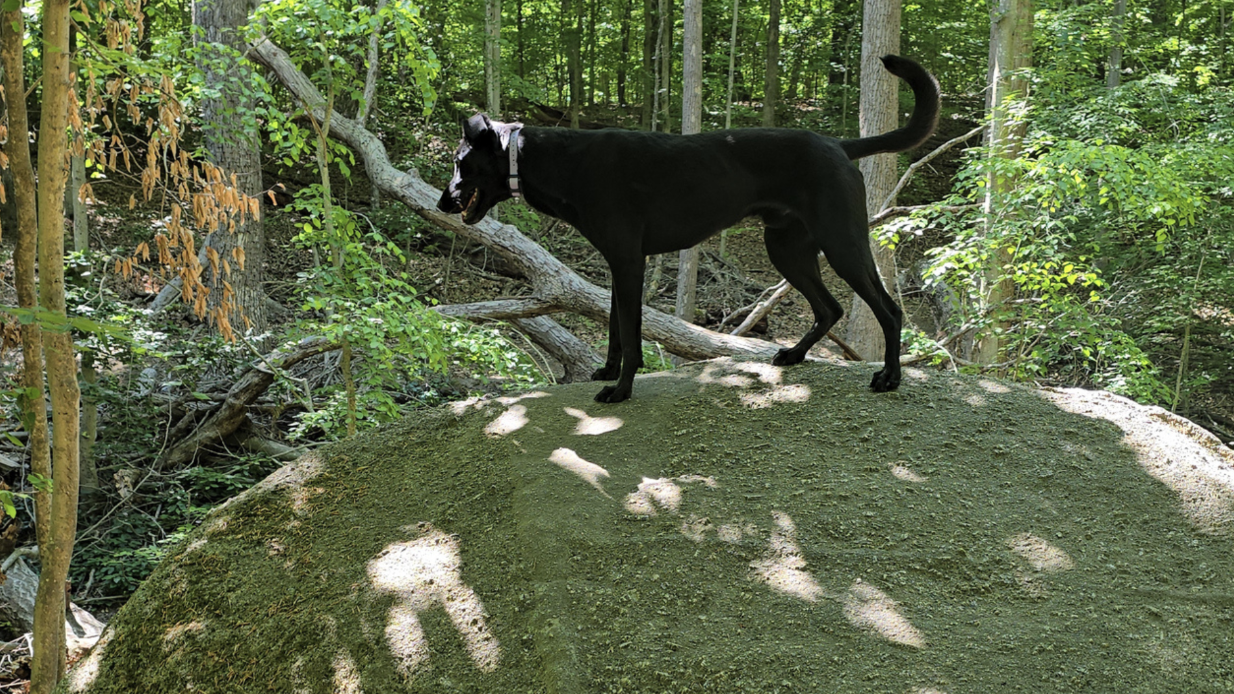
When hiking with your dog, safety should always come first. Take a moment to learn about where you’re hiking before you go. Sites like AllTrails or even a simple Google search can help you find the right trail for your needs.
Always tell someone where you’ll be and when you plan to return. If you’re hiking in a state or national park, you can even notify park staff. Some parks require visitors to fill out an information card when parking, so they know when to be concerned if someone has not returned. Trails are often less populated than neighborhoods, so it’s important that someone knows your whereabouts.
There are also a few simple commands every dog should know that can make your hike much more relaxing and enjoyable. If you haven’t started working on those skills yet, now is a great time. At Impawsible Pups in Richmond, Virginia, we love helping owners achieve their adventure goals with their dogs, mainly because we love adventuring with our own dogs so much!
What to Bring When Hiking with Dogs
Before you hit the trail, it’s important to make sure you and your dog are properly prepared with the right gear.
The absolute must-haves:
- Water with a collapsible bowl for your dog
- Snacks for you
- Snacks for your dog, especially if this is a multi-hour hike
- Identification for both you and your dog
- Leash
- First aid kit that includes bandages and wraps
- And last but not least, poop bags
You may be asking, “Why poop bags? We’re in nature anyway.” First, remember the rule of the trail: Leave No Trace. Dog waste often contains higher levels of nitrates than the waste of wildlife you encounter, which can create runoff issues. More importantly, your dog should be staying on the trail. Would you want to step in dog poop while trying to enjoy nature? Please bag the waste and carry it out.
Bonus: I’ve often used poop bags to pick up litter left by others, which always makes me feel like a good person!
There are a few additional items I like to bring to make the day a little easier. I always pack a towel. Since I often hike around water, it gives me a way to dry my dog off before getting back in the car. It can also serve as a place to sit or, if necessary, be used as part of a makeshift sling if a dog becomes injured.
I also prefer to hike with my dog wearing a harness. A properly fitted harness allows you to assist your dog when needed. While that may not be necessary on an easy trail, it can be invaluable when helping your dog over logs, rocks, or other obstacles. As I learned on one particularly rainy and rocky hike, a harness can help prevent a minor slip from becoming a major problem.
Another option is a hiking backpack designed for dogs. This allows your dog to carry a small amount of gear and can provide additional physical and mental exercise. Just keep in mind that your dog should not carry more than approximately 15% of their body weight, and they should be gradually conditioned to carry that amount.
If I’m heading out for a full day, I also bring a water filter. While you can certainly hike without one, a water filter allows you to carry less water at the start while still having access to safe drinking water. Your standard household filter won’t work here. You need something capable of filtering protozoa such as Giardia and bacteria like E. coli. My personal recommendations are the Katadyn BeFree Gravity Filter and the Sawyer Squeeze Mini.
Lastly, bring a length of rope. You may never need it, but rope can be used to create a sling, drag, shelter support, or other emergency solution. It may be a bit overkill, but you’ll definitely feel prepared having it with you.
Common Trail Hazards and How to Keep Your Dog Safe
The most common hazards on the trail are ticks. These little arachnids are everywhere and can carry diseases such as Lyme disease and Ehrlichiosis. Fortunately, there are many effective flea and tick preventatives available. Talk to your veterinarian about which option is best for your dog.
Another concern is Leptospirosis. This bacterial disease is spread through the urine of infected animals and is often found in standing water, including puddles on trails. It can cause flu-like symptoms and, in severe cases, can be fatal. To make matters worse, Leptospirosis is zoonotic, meaning it can be transmitted to humans as well.
The good news is that there is a vaccine available. Many veterinarians administer it alongside other routine vaccines, so if it’s recommended for your dog, it’s worth considering. To further reduce risk, avoid allowing your dog to drink from puddles or stagnant water.
Other trail hazards include wildlife. The most common hazard I’ve personally encountered is snakes. Copperheads are prevalent throughout Virginia and can pose a serious threat to dogs. Staying on designated trails is important. If hiking off leash where permitted, keep your dog within sight and remain alert for snakes basking on or near the trail.
Beyond that, a reliable recall can help prevent your dog from chasing deer, rabbits, or even bears and getting themselves into a dangerous situation.
Our Favorite Dog-Friendly Hiking Spots Around Richmond, VA
One of the great things about living in Richmond, VA, is our access to the outdoors. Some of the most popular trails in the city are the Northbank and Buttermilk Trails. Easy to access, these trails are great for anyone looking for hills and a bit of a challenge.
Looking for something a little easier? Belle Isle is the perfect spot for dogs (or people) with mobility concerns.
Of course, I prefer something a little less… peopley. Around the city, Larus Park and Ancarrow’s Landing (affectionately known as the Poop Loop) offer great trails without quite as many people.
While there are plenty more spots in and around the city, sometimes you might want a bit of an escape. Just a two-hour drive from Richmond, White Oak Canyon Falls offers waterfalls, beautiful mountain vistas, and a chance to really disconnect.
End your day of hiking with dinner at Graves Mountain Lodge, and you’ve got the makings of a truly wonderful adventure.